Well, I got the battries I wanted to use. Now however I’m a bit confused as to how I should hook them together.
Pics I’d seen had threaded holes. These looked like they were threaded in the advertising but are not.
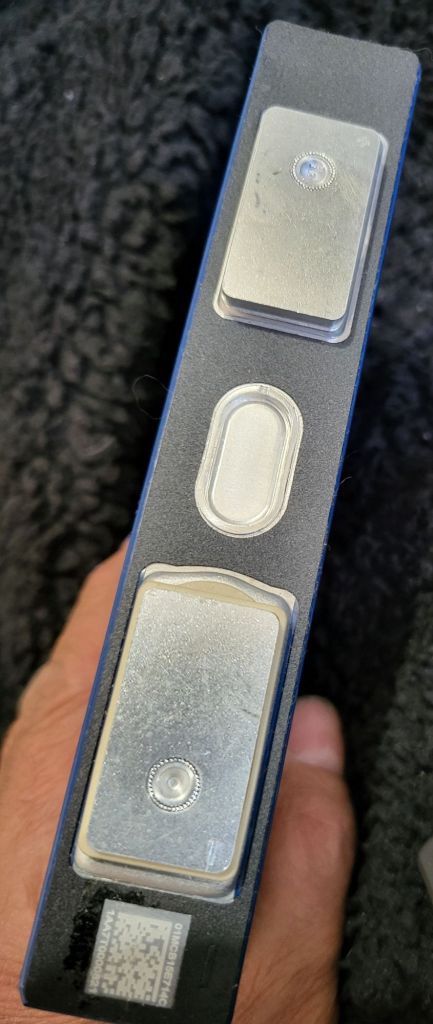
Lifepo 3.2 volts
I want to hook up 4 to give me a 12 volt 100ah battries, which I can then string together to whatever voltage I feel I need.
I can think of a few ways to hook them together but do not want to end up with a fire hazard. Below I will share what information I found while trying to figure this out in hopes it may help someone else.
If anyone out there knows how to do this, please share your knowledge. Who knows how many people you may help out.
A 3.2V LiFePO4 battery is a type of lithium-ion rechargeable battery that utilizes lithium iron phosphate (LiFePO4) as its cathode material. This chemistry offers several notable characteristics, making it a popular choice for various applications.
Here’s a breakdown of key information about 3.2V LiFePO4 batteries:
Technical Specifications:
- Nominal Voltage: 3.2V per cell. This is the standard operating voltage.
- Voltage Range: Typically ranges from 2.5V (fully discharged) to 3.65V (fully charged).
- Chemistry: Lithium Iron Phosphate (LiFePO4).
- Energy Density: Generally lower than other lithium-ion chemistries like NMC or NCA, typically ranging from 90-160 Wh/kg. However, newer generations are seeing improvements.
- Cycle Life: Exceptionally long, often ranging from 2,000 to over 7,000 cycles, and in some cases even up to 15,000 cycles, depending on the depth of discharge and operating conditions. This translates to a potential lifespan of 5 to 15 years or more.
- Charge/Discharge Rate: Can typically handle high charge and discharge currents. Efficiency is high, often above 90%.
- Operating Temperature: Wide operating temperature range, typically from -20°C to 60°C. They also exhibit good high-temperature performance and are less affected by temperature extremes compared to some other lithium chemistries.
- Self-Discharge Rate: Low self-discharge rate, typically around 1-3% per month, allowing them to retain charge well during storage.
Key Advantages: - Safety: LiFePO4 batteries are known for their high level of safety. They are very stable, resistant to thermal runaway, and don’t overheat easily. The phosphate-based cathode is inherently safer than other lithium-ion materials.
- Long Lifespan: The outstanding cycle life significantly reduces the total cost of ownership over time.
- Stable Voltage: They provide a consistent voltage output throughout most of the discharge cycle, which is crucial for applications requiring steady power.
- High Power Density: Capable of delivering high power output, suitable for applications with high current demands.
- Fast Charging: Can be charged relatively quickly without significant degradation.
- Deep Discharge Capability: Can typically be discharged to 80-90% of their capacity (Depth of Discharge – DoD) without significantly impacting their lifespan.
- Eco-Friendly: Utilize non-toxic materials and do not contain heavy metals like cobalt or nickel, making them more environmentally friendly.
- Low Maintenance: Unlike lead-acid batteries, they require little to no maintenance.
- No Memory Effect: They can be charged at any state of discharge without negatively affecting their capacity.
Potential Disadvantages: - Lower Energy Density: For a given weight and size, they store less energy compared to some other lithium-ion chemistries. This can be a factor in applications where weight and space are critical.
- Higher Initial Cost: Generally, the upfront cost of LiFePO4 batteries can be higher than lead-acid batteries, although the long lifespan often makes them more cost-effective in the long run.
- Voltage Limitations: The lower nominal voltage per cell (3.2V) means that more cells are needed in series to achieve higher voltages compared to batteries with higher nominal voltages.
- Performance at Very Low Temperatures: While they have a wide operating temperature range, performance, especially charging, might be reduced at very low temperatures (below 0°C).
Common Applications:
3.2V LiFePO4 cells are commonly used in various applications, including: - Electric Vehicles (EVs): Including cars, buses, and motorcycles.
- Energy Storage Systems (ESS): For solar power, wind power, and off-grid systems.
- Portable Power Stations: For camping, RVs, and backup power.
- Marine Applications: For boat batteries and trolling motors.
- Industrial Equipment: Such as forklifts and other machinery.
- RV (Recreational Vehicle) Batteries: As a lightweight and long-lasting alternative to lead-acid batteries.
- Golf Carts: Providing reliable and extended range.
- Backup Power Supplies (UPS): Ensuring uninterrupted power.
- Portable Electronic Devices: Although sometimes other lithium chemistries with higher energy density might be preferred for very compact devices.
Configurations:
Individual 3.2V cells can be connected in series to increase voltage (e.g., four cells in series make a 12.8V battery) and in parallel to increase capacity (Ah). Battery Management Systems (BMS) are crucial for managing the charging and discharging of LiFePO4 battery packs, ensuring safety and maximizing lifespan.
In summary, 3.2V LiFePO4 batteries offer a compelling combination of safety, longevity, and stable performance, making them an excellent choice for a wide range of power applications, especially where these factors outweigh the need for the absolute highest energy density.
 Slocum's Creak