
Sucess with pinion nut.
Caribbean Climate Hub. How to Disinfect Water After a Disaster. USDA Caribbean Climate Hub, 2017.
Caribbean Climate Hub. (2017). How to Disinfect Water After a Disaster. USDA Caribbean Climate Hub.
Caribbean Climate Hub How to Disinfect Water After a Disaster. USDA Caribbean Climate Hub, 2017.
Click on the following link for information on obtaining clean water after a disaster. This information could perhaps one day save your life.
Looking for ag/homesteading information? Here is a great free resource for you. Thousands of books and reports you can read online free of charge. https://www.nal.usda.gov/main/
Dehydrating is a great way to not only store food but to also have good wholesome food from your harvest or sales at your local stores or farmers markets available when your ready to use it. Food that may have otherwise spoiled months earlier can easily be saved and stored as it will take up much less space after dehydration. Not only is it easy to learn how to do dehydrators can be had rather inexpensively if you shop around. Below I have included a link to a fairly inexpensive model that I belueve should work for most people. I’d had several smaller dehydrators and after my last one quit working after twenty some odd years I upgraded to a bigger unit it holds up to fifteen pounds or so it says in booklet. I had sliced a ten pound bag of potatoes after discovering that I already had one at home. I just couldn’t pass up the $1.99 sale price. When it was all said and done I still had some shelves empty and the whole bags worth fit in a one gallon glass jar with room to spare. As with anything worth doing there is a learning curve to it and the more you do it the better you’ll become and the easier it gets. I’ve also included a link to an inexpensive book to help you get started if you need one and as always with the links I share you can always search for something more to your liking if you so choose! Thank your for reading my blog and happy dehydrating!
Presto 06300 Dehydro Electric Food Dehydrator, Standard


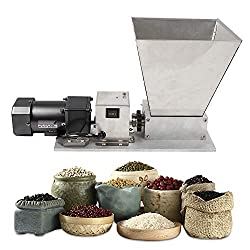
If your working towards self sustainable living milling your own grains can be rather satisfying. I have provided a link to purchase the mill shown below. It may be more than you want to spend, then again it may be just exactly what your looking for. When I bought my first mill I went on the cheaper end of the spectrum but I wasn’t sure that milling my own grain by hand was exactly what I wanted to do, it was however something I wanted to try! If I remember correctly the one I bought was $60 plus shipping. It worked, however it didn’t really grind fine enough for wheat flour but made great corn flour for corn bread. If like me your not sure milling flour is for you I’d recommend buying a better mill than a cheaper one. This may not sound logical at first but hear me out. You buy a cheap mill and decide it’s not for you then your likely stuck with a cheap mill that no one else wants, I couldn’t even give mine away but with a better unit chances are you’ll be able to resell it to get out of it or to upgrade to an even better one. Grinding ones own flour is a great way to be able to have a better existence should civilization collapse. For me personally doing anything that makes life easier or better is a must do.
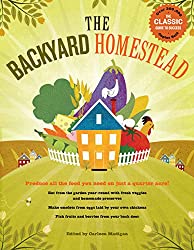
Want to homestead but not real sure where to start? Here’s an affordable book that could help you on your journey. The link below is an affiliate link and if you purchase this or other items after following the link I may earn a small commission that adds nothing to your cost but helps me make my homestead a reality.
The Backyard Homestead: Produce all the food you need on just a quarter acre!
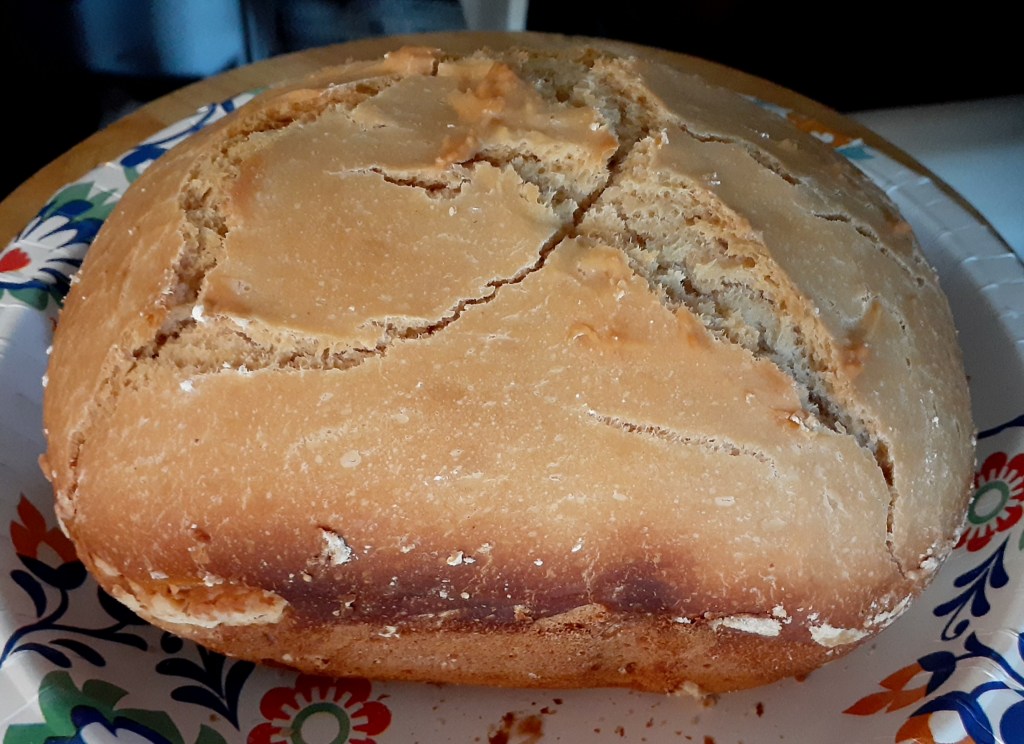
So today I finally decided to make bread from scratch. It’s not real pretty but it’s tasty! I Googled the recipe and you can find plenty of recipes online easily as well and so I won’t put it on here, it was real easy and I won’t be buying bread from the store anymore!
I often see these books being highly recommended on the homesteading groups I belong to on Facebook. These are the Firefox books and yes, this is an affiliate link as I had mentioned before. It cost you nothing to use for follow link and if you purchase something I make make a little something.
The other day someone came into the shop eating pinion pine nuts. Some were dropped and I found a couple the following day. I’ve decided to try and sprout them, yes I know it will take a long time for them to grow to a size that will produce more nuts but I figure if I don’t live long enough to enjoy them someone else and some wildlife will no doubt enjoy them and the trees as well. I have watched several videos on sprouting pine trees but have opted to try a method that I have had great luck using to sprout other seeds. I take a sandwich bag or larger depending on how many seeds I’m trying to sprout, fold a paper towel to fit inside of bag, put enough water into bag to dampen paper towel and place seeds inside. You can then place seeds in a warm or cool place like the fridge depending on what the seeds need to germinate. I will assume my seeds have gone through what they will need to grow and so will place them on top of the fridge where it’s nice and warm. If your interested in growing things from seed but don’t have a lot of experience growing from seed I’d recommend watching several videos, reading books or seeking out someone willing to share their knowledge with you and go for it.

Today I’m showing you my kiwi plants and will explain a bit about how we started them. I had come across a video on growing kiwi from seed on YouTube. So the boys and I decided to give it a go. First thing I did was cut a thin slice from the fruit and then using a toothpick I pulled the seeds loose until I had quite a few. After that a paper towel was folded up and placed inside of a zippered sandwich bag, it was then moistened but not soaking wet. ( Too much water can drown your seeds. ) Seeds were then placed into bag on top of damp paper towel and set on top on fridge. After about two weeks, give or take the seeds began to sprout. I’d guess out of the 50 or so seeds about half sprouted but many died before getting decent roots. Out of the 25 only five went on to start growing and out of those 5, 3 remain and are now getting bigger by the day. As I learn what I’m doing I’ll try to make some videos to show some of what we are doing on our micro homestead.


 Slocum's Creak