Turns out my battries are junk, at least for using them to run anything. I could probably use them to run some LEDS or something small.
But sadly, they have bad cells, and apparently, I need a new battery tester.
According to mine they are good but need recharged, which I thought was odd since they are hooked up to the solar panels.
However, when I started to use the washing machine it must have pushed them over the edge because with a good battery tester that I’d borrowed show dead cells in each battery.
Oh well, such is life. Expand a little and figure out what you need to keep it going forward. I have a couple of 100ah lifepo4 battries coming. With them, I should be able to wash and hopefully dry the clothes when they can’t be hung out on the line.
I also have a lot of 3.2 volt lifepo4 batteries that I’d bought as used, however they appear new, which may sound like a great deal.
However, it also means the lugs are not threaded, and there is no way to connect the cells together to make 12 volt battries as I’d intended to do.
It’s recommended that lugs be laser welded on. However I don’t know that there is anyone anywhere close to here that had one, and I’m not spending thousands of dollars to buy one.
I’m going to try to figure out a way to clamp them down or perhaps spot weld something onto them.
Anyway, that is a story for another time. I’ll update you as that as I make progress on it.
Tonight’s post is short, I’m tired and need sleep. Thank you for stopping by.
I had thought I would post every day for a year but have decided that I will take Sundays off instead.
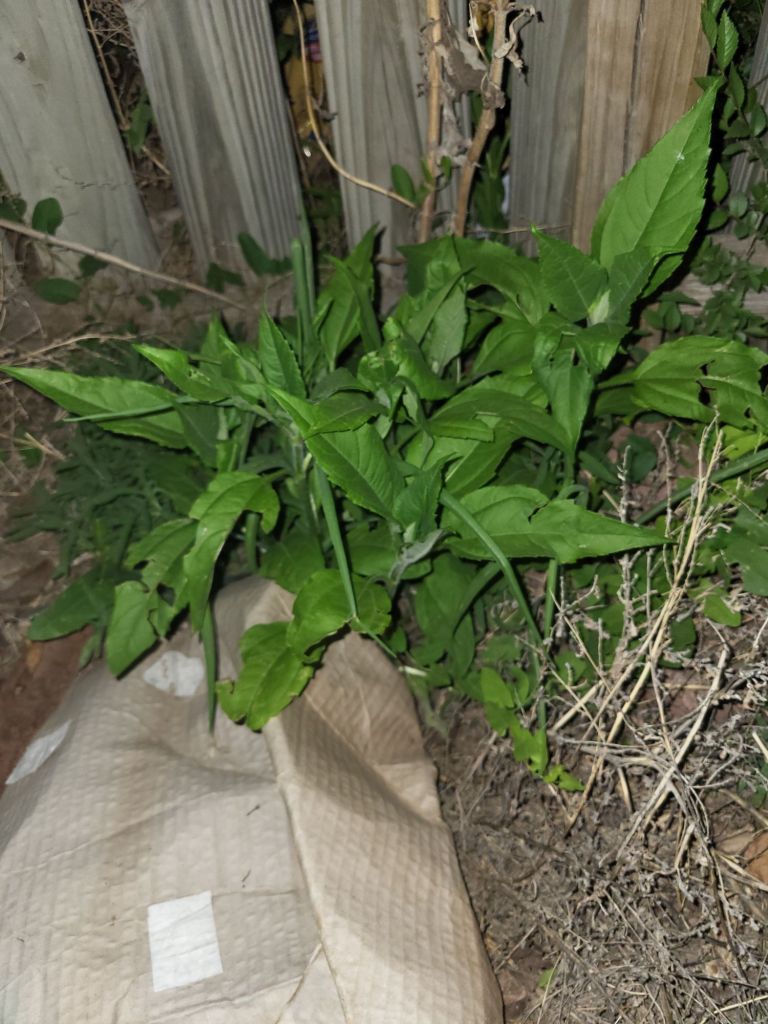
I need to flatten the cardboard back down, but this is our small patch of sunchoke.
Above is our small patch, they spung up about a foot away from where we’d planted the tubers last season. These will be a great addition to our food forest.
A Gardener’s Delight and Culinary gem.
Have you ever encountered a vegetable that’s both easy to grow and incredibly versatile in the kitchen?
Let me introduce you to the Jerusalem artichoke, also known as the sunchoke.
Despite its name, it has nothing to do with Jerusalem or artichokes! This knobby tuber is actually related to the sunflower, and its flavor is often described as nutty and slightly sweet.
A Gardener’s Dream
If you’re looking for a low-maintenance crop, Jerusalem artichokes are a fantastic choice. Here’s why:
*Easy to Grow:** Just plant a few tubers in the spring, and they’ll happily multiply and spread. * Hardy:** They can tolerate a wide range of soil conditions and even survive frost. * Tall and Attractive: Their tall, sunflower-like stalks add a beautiful touch to any garden. *Perennial:** Once planted, they’ll keep coming back year after year.
*A word of caution:** Jerusalem artichokes can be quite prolific, so be sure to give them plenty of space!
Nutritional Powerhouse
Don’t let their unassuming appearance fool you – Jerusalem artichokes are packed with nutrients:
*High in Inulin:** A type of prebiotic fiber that’s great for gut health. *Rich in Iron:** Essential for energy and oxygen transport. *Good Source of Potassium:** Helps regulate blood pressure. *Low in Calories:** A healthy addition to any diet.
From Garden to Table: Culinary Uses
The versatility of Jerusalem artichokes in the kitchen is truly remarkable:
*Roasted: Roasting brings out their natural sweetness and nutty flavor. * Mashed: They make a delicious and creamy alternative to mashed potatoes. *Soups and Stews: Add a unique depth of flavor to your favorite winter warmers. *Salads: Thinly sliced or grated, they add a crunchy texture and subtle sweetness to salads. *Pickled: A tangy and flavorful way to preserve them.
So, whether you’re a seasoned gardener or a culinary adventurer, Jerusalem artichokes are definitely worth exploring. They’re easy to grow, packed with nutrients, and incredibly versatile in the kitchen. Give them a try – you might just discover your new favorite vegetable!
Last week, I promised myself and the boys that by today, I would, in fact, wash a load of clothes using solar. It seems the electric company want to charge me a demand use charge every time I do laundry or use anything that pulls a fair amount of electricity.
I’m over it, I’m moving full steam ahead, I’ll keep the power turned on but I will continue making it so we don’t need it. All they will get is the $20 or whatever the fee is for allowing them to have poles and meters in my yard.
One doesn’t even run to our house, and I have no idea when they set the second pole. I wasn’t home when they did it.
I had intended to buy a deep cycle battery or two today while I was out shopping. However, they were being, well boys.
I took too long for thier short attention spans, I of course look at multiple things because I have so many projects going at any given time.
If I went by myself I could definitely get more done, but they are young and it’s not like I’m just driving across town, which here I’m convinced you can get anywhere in town leaving from any point in town and arrive in five minutes or so.
Where we go is an hour one way in either direction so I make the best of it.
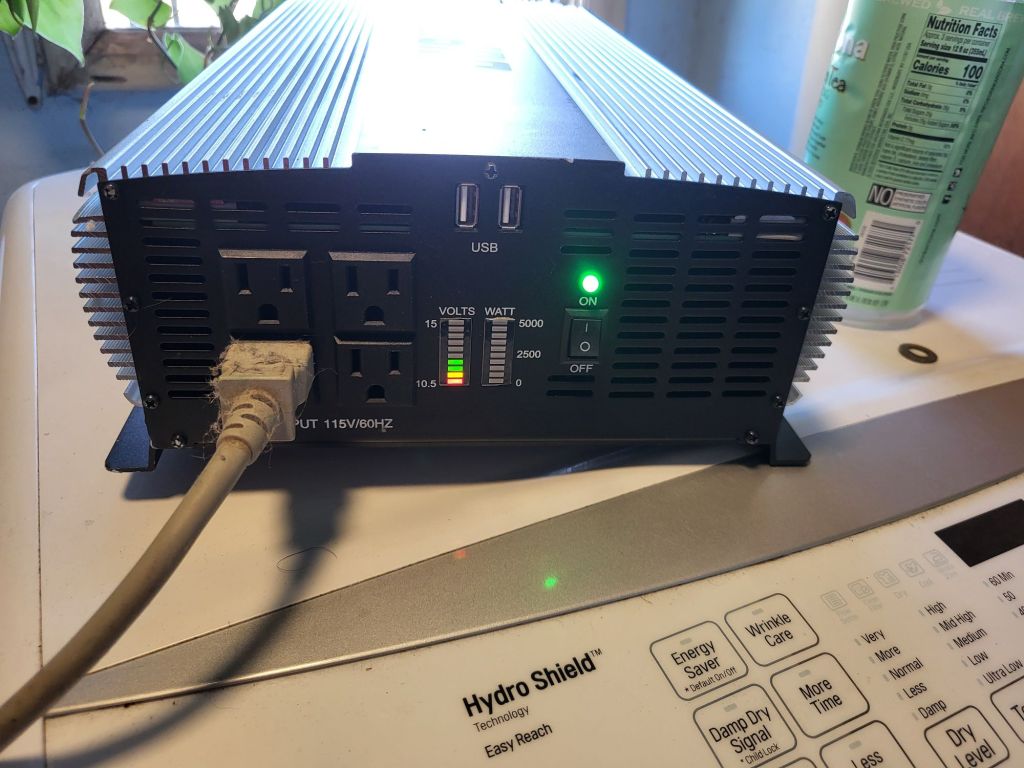
5k Jupiter inverter.Almost halfway through the first load.
This is running on one 100-watt solar panel and a truck battery of unknown age and condition. I generally use this battery to run the 12 volt grill. Which allows us to cook a meal for the price of a handful of pellets.
The last bag was $17 for a 40-lb bag.
While my set up for this is sketchy at best, it is working and I can see where I need to improve to make this a regular thing.
As it sits now, there is one 100-watt panel, one 100amp mppt charge controller, a Jupiter 5K 12 volt inverter, and a pair of 4agw 20-foot Viking jumper cables.
Running full capacity, it calls for 2agw wires not more than 3 foot long. So I’m really pushing my luck here, though I’m only pulling around half or a little less of the rated power.. Nothing is getting warm. The cooling fans haven’t even kicked on yet and may not. The unit is cool to the touch.
At first, I tried with just the battery, but it shut down on the first spin, so that was when I added the panel.
While I would discourage anyone from trying the things I attempt and will tell you this as everything else I do and / or share are strictly for entertainment purposes only. I’m far from being an expert and am learning as I go, I have plenty of power to electrocute myself and burn our house down.
I’m just doing a little at a time and figuring things out as I go. The soon to be 12 volt swamp cooler is my next big undertaking, or at least that is my plan.
Once I figure out the pully, I can start putting it together.
As always, thank you for reading my blog, I appreciate you.
I don’t know about anyone else but it’s been a loooong week. I figured I’d have a drink and relax while enjoying some rare quite time. The boys generally are anything but quite.
I seldom imbibe, but tonight is going to be different. I have my sphere ice cube in the newish and only bourbon glass I own.
Found it thrifting and picked it up 25¢. In any event, I slowly poured my drink of choice over the ice.
I could hear the ice crack and I thought I’m going to enjoy this, maybe even have a second glass.
I got myself ready for bed. For months, I’ve had plans running through my head of the things I want to do or at least attempt to do.
Of these things, I need to set up my CNC router, it’s likely underpowered for some of the things I want to attempt but it’s a starting point and I can upgrade if I need to. I also have a blast furnace I need to set up as well. ( I have a homemade one I made from the brake drum from a Kenworth, but want better. ) I will use it to make aluminum blocks that will eventually be turned into molds.
These molds will then be used with the plastic injection molding machine that I am in the process of dreaming into life.
I have the PID and ordered band heaters I just need to find and fabricate a few parts and I will be on my way. Finding plastic is no problem, in fact plastic itself seems to be a problem of sorts. Finding things to make from it that will be useful may help at least a little.
I have delusions of grandeur, any thing I can come up with will be a drop in the bucket at best. But if enough dreamers come up with solutions, perhaps it will help.
I also have a micro mill in the works. To say I stay busy is an understatement of biblical proportions..lol
Raising young boys is more than enough to keep me hopping to be sure. On top of that, I of course have this blog, writing means a great deal to me. I’m working on a children’s book that the youngest and I drempt up one afternoon a few years ago.
I’m also a content creator and post on YouTube and Tictok, though I’m thinking the latter is a waste of time where monetization is concerned.
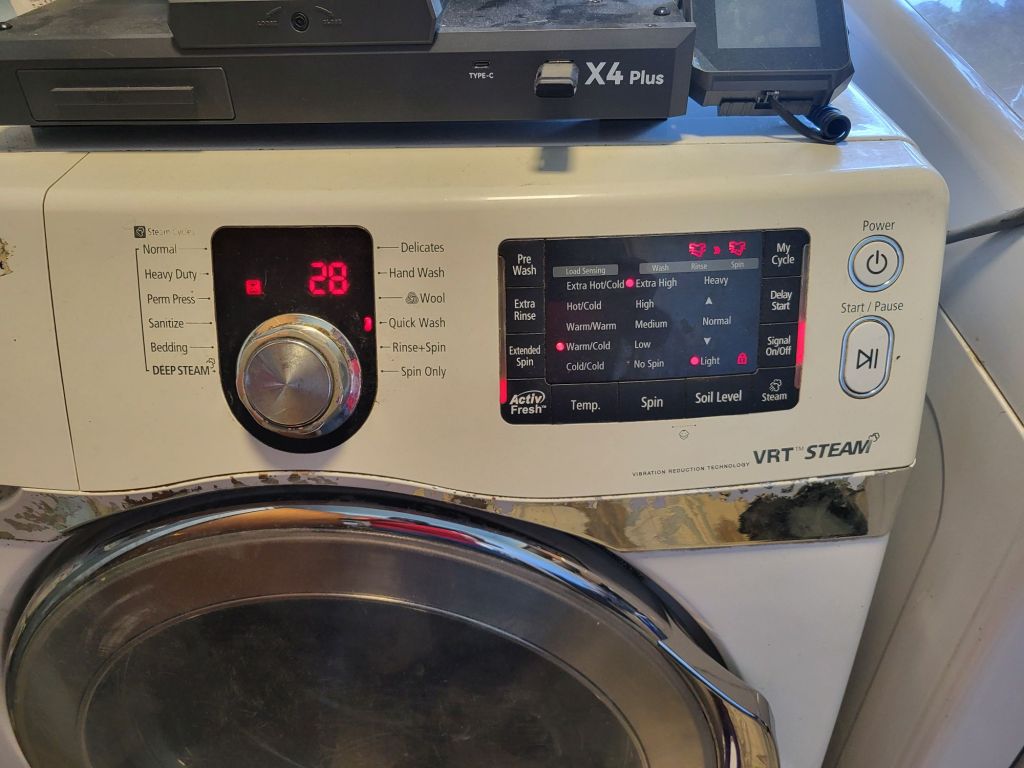
Tomorrow brings new challenges, I will be attempting to run the clothes washer on solar for the first time. My inverter was bought on a whim before having done any real research into the matter, but come on, it was on sale at a steep discount. How could I pass it up? Ugh
Anyway, it’ll be a learning experience. And I will, of course, be including the boys. Maybe if they learn from my trial and error, they can make fewer mistakes?
Which brings me back to where I started. While I could ramble on forever, I’ll spare you.
The drink I poured is cloudy and has something floating in that I won’t be drinking. It seems my ice may have been handled by one of the boys, perhaps dropped on the floor and stuffed back in the zip lock bag with the rest? I don’t know what happened, and it doesn’t matter, to be honest. I won’t be having a drink after all. Seems doing a little writing put my mind at ease, and that was, after all, what I started out intending to do.
All I know is I made it through another day, and now it’s bedtime. If you made it this far, thank you for reading and following along. Have a great night.
Let’s get down to the root of the matter! Growing ginger can be a rewarding experience, adding a fresh, zesty flavor to your cooking straight from your own garden (or even indoors!).
Spice Up Your Life: A Guide to Growing Ginger at home.
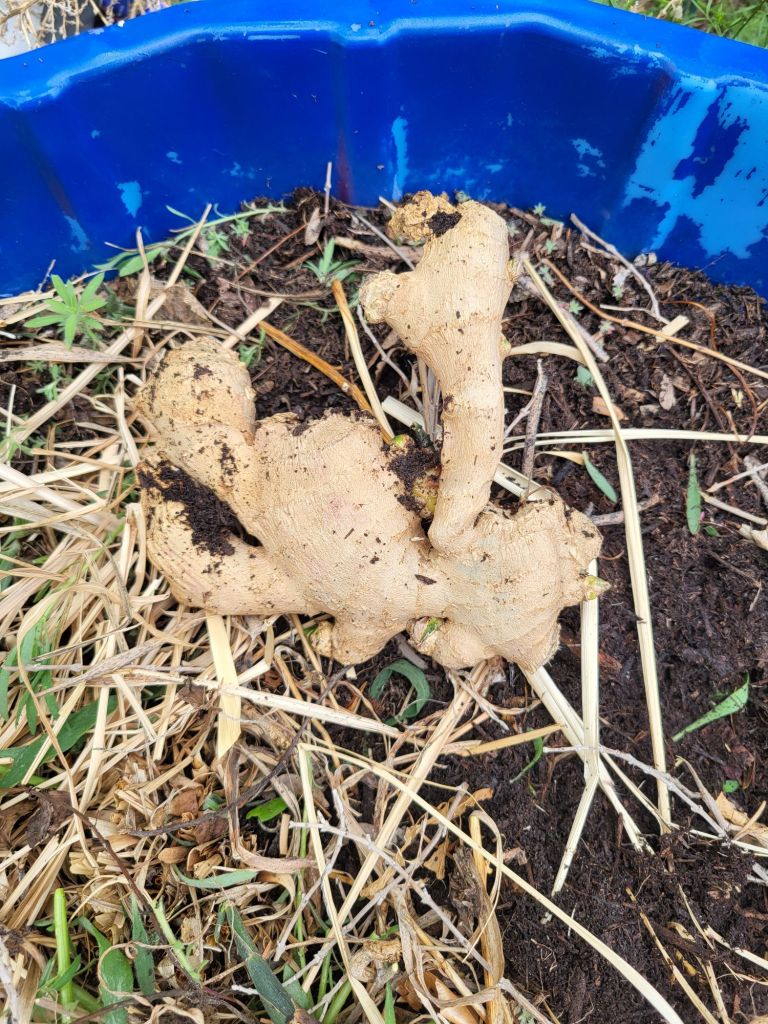
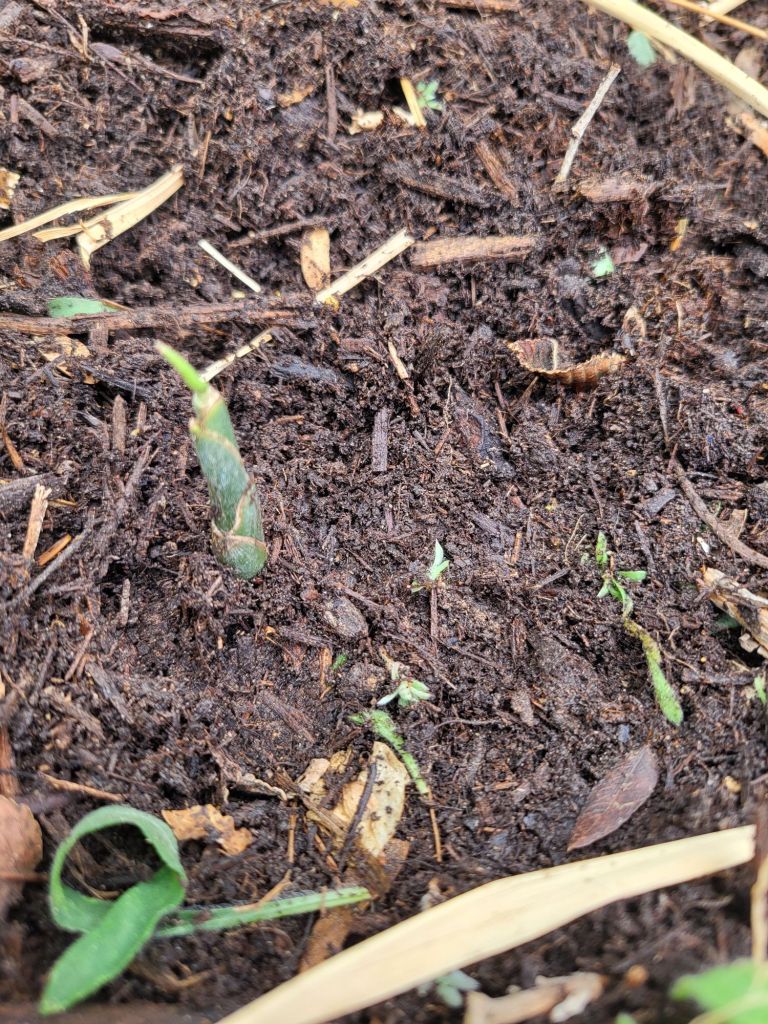
One of the two rhizomes I’m planting this year.
For what it’s worth I had been ill and it was suggested to me to make a ginger tea. I picked out two decent rhizomes. I ended up going to bed shortly after getting home with them and promptly forgot about them. They’d slipped behind our instant.
It was probably two weeks later that I stumbled across them again, I was almost afraid to look, I just knew they had spoiled and would be headed to the compost pile.
Much to my surprise and delight, they had sprouted and looked really healthy. I broke off several of the shoots thing I’d end up with a lot of ginger. However, none of them survived. So I’ve planted the entire thing.
Ginger – that knobby, fragrant rhizome that adds a zing to everything from stir-fries to soothing teas.
Did you know you can actually grow your own ginger, even if you don’t live in a tropical climate?
While it thrives in warmth and humidity, with a little care and the right techniques, you can cultivate this flavorful spice right in your own yard.
Imagine the satisfaction of harvesting your own fresh ginger, bursting with flavor and aroma, just steps from your kitchen.
Whether you have a garden or a sunny windowsill, growing ginger can be a fun and rewarding horticultural adventure.”)
Choosing Your Ginger: Start with the right root.
The journey begins with selecting a healthy ginger rhizome to plant. Here’s what to look for:
* Organic is Best: Opt for organic ginger from a grocery store or purchase seed ginger from a reputable nursery. Non-organic ginger might have been treated with growth inhibitors. * Look for “Eyes”: Choose a rhizome that has visible growth buds, also known as “eyes.” These are small bumps that look like they might sprout. * Healthy and Firm: The rhizome should be firm to the touch, not soft, shriveled, or moldy. (Tip for local conditions: “Given our Kansas climate, starting ginger indoors is highly recommended, especially to give it a good head start before the warmer months arrive.”) Planting Your Ginger: Patience is a Virtue Once you have your healthy ginger rhizome, it’s time to get planting: * Prepare the Rhizome: You can plant the whole rhizome or cut it into pieces, ensuring each piece has at least one or two “eyes.” Allow the cut pieces to air dry for a day or two to help prevent rot. * Choose Your Container (Indoors) or Location (Outdoors): * Indoors: Select a pot that is at least 12 inches deep and wide, as ginger roots spread horizontally. Make sure it has good drainage. * Outdoors: Choose a spot that receives partial shade, especially during the hottest part of the day. The soil should be rich, well-draining, and slightly acidic. * Planting: Place the ginger piece(s) about 2-4 inches deep with the “eyes” facing upwards. * Watering: Water gently but thoroughly after planting. Keep the soil consistently moist but not waterlogged. * Warmth and Humidity: Ginger thrives in warm temperatures (ideally between 70-85°F or 21-29°C) and high humidity. Indoors, you might need to mist your plant occasionally, especially during dry periods. Outdoors, choose a sheltered location. (Consider local timing: “In Syracuse, start your ginger indoors in late winter or early spring (February-March) to give it ample time to grow before the cooler fall temperatures arrive.”) Nurturing Your Ginger: A Little TLC Goes a Long Way As your ginger grows, here’s how to keep it happy: * Watering: Continue to water regularly, keeping the soil consistently moist. Reduce watering slightly in the fall as the plant’s growth slows down. * Fertilizing: You can feed your ginger plant with a balanced organic fertilizer every 4-6 weeks during the growing season. * Pest and Disease Control: Ginger is relatively pest and disease-resistant. However, keep an eye out for common indoor plant pests like spider mites or aphids and address them promptly if they appear. * Patience! Ginger takes time to mature. You’ll likely see shoots emerge within a few weeks, but it can take several months for the rhizomes to develop significantly. (Outdoor considerations for Kansas: “If you move your potted ginger outdoors for the summer, choose a spot with protection from strong winds and direct afternoon sun. Be prepared to bring it back indoors once nighttime temperatures start to consistently drop below 50°F (10°C).”) Harvesting Your Spicy Reward: The Sweet Smell of Success You can start harvesting small pieces of ginger about 8-10 months after planting. * Gentle Digging: Carefully dig around the edges of your plant to unearth some of the rhizomes. You can break off a piece and leave the rest of the plant to continue growing. * Full Harvest: For a larger harvest, you can wait until the foliage starts to die back in the fall. Dig up the entire plant and harvest the rhizomes. (Tip for continuous harvest: “If you’re growing ginger in containers indoors, you can often harvest small pieces from the side as needed, allowing the plant to continue producing.”)
Beyond the Root: Enjoying Your Homegrown Ginger Freshly harvested ginger has a more intense and vibrant flavor than store-bought.
Use it in your favorite recipes, brew a warming ginger tea, or even try pickling it. The possibilities are endless!
Growing your own ginger is a testament to the fact that you don’t need a tropical paradise to cultivate exotic flavors.
With a little care and attention, you can bring the warmth and spice of homegrown ginger right to your kitchen.
Have you ever tried growing ginger? Share your tips and experiences in the comments below!
Living in Kansas, we’re no strangers to dramatic weather. While the beauty of a prairie thunderstorm can be captivating, the threat of tornadoes demands respect and preparedness. However, as has been seen over the last few years, a tornado can strike anywhere.
Knowing what to do when a tornado is expected can make all the difference in protecting yourself and your loved ones.
Time is precious when a tornado warning is issued. Having a plan in place and knowing what actions to take can significantly increase your safety.
Let’s review the crucial steps to take when a tornado is expected in your area.
Understanding the Alerts: Watch vs. Warning
First, it’s important to understand the difference between a tornado watch and a tornado warning:
* Tornado Watch: This means that conditions are favorable for tornadoes to develop in your area. It’s like a weather “heads-up.” During a watch, you should stay informed, monitor weather updates, and review your safety plan. * Tornado Warning: This means a tornado has been sighted or indicated by weather radar and poses an imminent threat to the warned area. This is when immediate action is required. (Clear call to action: “When a tornado warning is issued for your area, don’t delay – act immediately!”) What to Do When a Tornado Watch is Issued: * Stay Informed: Monitor local news channels, radio, weather apps, and official social media accounts for the latest updates. * Review Your Safety Plan: Remind yourself and your family of your designated safe place and the route to get there. * Check Your Supplies: Ensure your emergency kit is stocked with essentials like a flashlight, batteries, a first-aid kit, water, non-perishable food, a whistle, and a NOAA weather radio. * Secure Outdoor Items: Bring in loose outdoor items like lawn furniture, toys, and decorations that could become projectiles in high winds. * Be Aware of Changing Weather Conditions: Watch for signs of severe weather, such as dark or greenish skies, large hail, a loud roar like a freight train, and rotating clouds. What to Do When a Tornado Warning is Issued: Your immediate goal is to get to the safest possible shelter. * Go to Your Predetermined Safe Place: * Basement or Storm Cellar: These offer the best protection. Get underground and away from windows. * Interior Room on the Lowest Floor: If you don’t have a basement, go to an interior room on the lowest floor of your home, away from windows, exterior walls, and doors. A small room like a bathroom, closet, or hallway is best. * Community Shelter: If your community has designated storm shelters, know their locations and have a plan to get there quickly. * Protect Yourself: * Get Low: Crouch down on your knees and protect your head and neck with your arms. * Cover Yourself: If possible, get under a sturdy piece of furniture like a table or desk. * Stay Away From Windows: Flying debris from shattered windows can cause serious injury. * If You Are in a Vehicle or Outdoors: * Never Try to Outrun a Tornado in a Vehicle: Tornadoes can change direction quickly and are often faster than cars. * Seek the Lowest Spot: If no sturdy building is nearby, lie flat in a ditch or other low-lying area and cover your head and neck with your arms. Be aware of potential flooding. * If You Are in a Mobile Home: * Mobile Homes Offer Little Protection: Evacuate immediately and go to a designated storm shelter or the sturdiest nearby building. * After the Tornado Passes: * Stay Informed: Continue to monitor weather updates and official information. * Be Aware of Hazards: Watch out for downed power lines, debris, and damaged buildings. * Do Not Enter Damaged Buildings: They may be unstable. * Help Others if You Can: Check on your neighbors and offer assistance if it’s safe to do so.
Tornadoes are powerful forces of nature, but being prepared and knowing what to do can significantly improve your chances of staying safe. Take the time to create a plan, practice it with your family, and stay informed. It’s a small investment that can yield invaluable peace of mind.
For more information on tornado safety, you can visit your County Emergency Management website or contact their office directly.
Want a lawn that makes the neighbors green with envy (the good kind!)? A big part of achieving that lush, evenly cut look is having a lawnmower that’s running smoothly.
Just like your car, your lawnmower needs a little TLC to perform its best and last for years to come. The good news? Most routine maintenance is something the average homeowner can easily tackle.
Investing a little time in regular maintenance will not only keep your lawn looking fantastic but can also prevent costly repairs down the line and extend the life of your mower.
While a lawn may not be necessary for many who homestead, if you do have one, keeping it neat not only gives you a place to ground, touch grass, let the kids play, etc… it also helps keep snakes and other unwanted visitors at bay. That being said:
Let’s dive into some essential tasks you can do to keep your machine humming.”) The Regular Checklist for a Happy Mower (and a Happy You!) These are some key things you should check and maintain regularly throughout the mowing season: * Keep it Clean: After each use, take a few minutes to brush off any grass clippings and debris from the top and underside of the mower deck. Built-up grass can trap moisture, leading to rust and affecting the mower’s cutting performance. A stiff brush or even a putty knife can work wonders. A hose and sprayer works well also and some mower come with a place to hook your water hose up to. They work well. * Check the Blade: Before each use, take a quick look at the mower blade. Is it visibly damaged, bent, or excessively dull? A sharp, balanced blade is crucial for a clean, even cut. Dull blades tear the grass, making it look ragged and stressing the plant. * Maintain Proper Oil Level: Just like your car, your lawnmower needs the right amount of clean oil to lubricate its engine. Before each use (or as recommended in your owner’s manual), check the oil level using the dipstick. Add the recommended type of oil if it’s low. * Inspect the Air Filter: A clean air filter allows the engine to breathe properly. A clogged filter reduces performance and can even damage the engine over time. Check your air filter regularly (every 25 hours of use or once a season, depending on conditions) and clean or replace it as needed. Paper filters can often be tapped gently to remove loose dirt, while foam filters can sometimes be washed. * Check the Spark Plug: The spark plug ignites the fuel in the engine. A dirty or faulty spark plug can cause starting problems or rough running.
Inspect the spark plug periodically and clean or replace it according to your owner’s manual’s recommendations.
Getting Down and Dirty: How to Change Your Lawn Mower Oil Changing the oil is a bit more involved but still manageable for most homeowners. Here’s a general guide (always consult your owner’s manual for specific instructions for your model) Youtube will more than likely have a video on your mower so if you don’t have an owner’s manual check there, and if not the closest library or Google search should help.
* Gather Your Supplies: You’ll need the correct type and amount of new oil (check your manual!), an oil drain pan, a wrench or socket to remove the drain plug (if your mower has one), and rags or paper towels to clean up any spills. You might also need a funnel to pour in the new oil. * Warm Up the Engine (Optional but Recommended): Running the mower for a few minutes beforehand can help warm up the oil, making it flow more easily. Make sure the engine is OFF and the spark plug wire is disconnected before proceeding with the oil change. * Locate the Drain Plug or Drain Spout: Your mower will either have a drain plug on the bottom or side of the engine or a drain spout with a cap. On some you will have to pull the dipstick out and either pump it out with a small trasfer pump or turn the mower upside down over a drain pan. Consult your owner’s manual if you’re unsure. * Position the Drain Pan: Place the drain pan directly beneath the drain plug or spout. * Remove the Drain Plug or Open the Drain Spout: Use the appropriate wrench or socket to carefully remove the drain plug. If you have a drain spout, remove the cap and direct the flow into the pan. * Allow the Old Oil to Drain Completely: Let the old oil drain fully into the pan. This might take several minutes. * Reinstall the Drain Plug or Close the Drain Spout: Once the oil has drained, replace the drain plug and tighten it securely (but don’t overtighten). If you have a drain spout, close the cap tightly. * Locate the Oil Fill Cap: This is usually on the top or side of the engine and is often marked with an oil can symbol. * Add New Oil: Remove the fill cap and carefully pour in the new oil using a funnel, making sure to use the correct type and amount as specified in your owner’s manual. Don’t overfill! * Check the Oil Level: Replace the fill cap and then check the oil level using the dipstick. Add more oil if needed to reach the correct level. * Dispose of Old Oil Properly: Take your used motor oil to a designated recycling center or auto parts store for proper disposal. Do not pour it down the drain or throw it in the trash. (Short paragraph reinforcing the benefits: “Taking these routine steps, especially changing the oil, will keep your lawnmower running efficiently, prevent engine wear, and help you achieve a nice looking lawn.
A Little Effort Goes a Long Way Maintaining your lawnmower might seem like another chore, but the benefits are well worth the effort. A well-maintained mower will cut cleaner, last longer, and make your lawn care tasks much more enjoyable (or at least less frustrating!). So, take a little time to show your mower some love, and it will reward you with a yard that looks its absolute best.
What are your go-to lawnmower maintenance tips? Feel free to share them in the comments below!
In the event of a natural disaster you may lose electricity and so to the ability to receive critical information about what is going on and where or how to find help.
I was given a crystal radio set for Christmas many years ago. I was fascinated by it, I no longer remember what channel it was tuned into. And as time went by I eventually forgot all about it as it sat in a garage that was seldom used for anything but storage. Fast forward 20 years and as I was moving I happened to see it, right I had set it up.
I grabbed it and packed it up, I recently came across it again and plan on setting it up to see if it still works, it’s got to be about 40 years old now. Anyway, on to the post. I encourage you to look into building, either from a kit or plans found online on in a book.
Hear the Airwaves: Rediscovering the Magic of Crystal Radios.
In a world saturated with digital noise and complex technology, there’s a quiet wonder to be found in the simplicity of a crystal radio.
Requiring no batteries or external power source, these ingenious devices pluck radio waves directly from the air, transforming them into audible sound. More than just a nostalgic novelty, crystal radios offer a fascinating glimpse into the fundamental principles of radio technology and a hands-on way to connect with the invisible world around us.
Imagine building a device with just a few basic components that can pull music and voices out of thin air. It sounds like magic, but it’s pure science! Crystal radios are a testament to the power of ingenuity and a rewarding project for tinkerers of all ages.”) A Blast from the Past (and Still Relevant Today!)
The heyday of the crystal radio was in the early 20th century, before the widespread availability of battery-powered radios. They were affordable, accessible, and played a crucial role in bringing news and entertainment to households.
While modern electronics have advanced exponentially, the crystal radio retains its charm and educational value. It’s a tangible link to the pioneers of radio and a fantastic way to understand the basics of how radio waves are captured and converted into sound.
Why should people care today? * No Power Needed: That’s right – zero batteries! The energy to power the faint sound comes directly from the radio waves themselves. Talk about sustainable technology! * Educational Fun: Building a crystal radio is an incredible hands-on learning experience, teaching basic electrical concepts and the principles of radio transmission. * Simple and Affordable: The components needed are relatively inexpensive and readily available online or at electronics supply stores. * A Connection to History: Building and listening to a crystal radio offers a tangible link to the early days of radio communication. * A Unique Sense of Accomplishment: There’s a real thrill in hearing sound emerge from a device you built yourself, powered by nothing but the airwaves. (Intriguing question to encourage engagement) Ready to try your hand at building your own receiver of the invisible? Get Building! (Two Simple Plans) Here are two basic plans to get you started on your crystal radio journey. Remember, results can vary depending on your location, the strength of local AM radio signals, and the quality of your components. Plan 1: The Basic Beginner (Simple diagram or clear image of the components laid out) Components You’ll Need: * Antenna Wire: A long length of insulated wire (25-100 feet). The longer, the better for catching more signals. * Ground Wire: A shorter length of insulated wire. * Crystal Detector: A germanium diode (like a 1N34A or similar). * Tuning Coil: You can often use a coil from an old AM radio or purchase a variable inductor. For a very basic setup, you can experiment with winding wire around a cardboard tube (more on this in Plan 2). * Variable Capacitor (Tuning Capacitor): Usually salvaged from an old radio or purchased. Around 100-365 pF (picofarads) is a good range. * High-Impedance Headphones: These are crucial for hearing the faint signals. Old crystal radio headphones are ideal, but some modern high-impedance headphones can work. Low-impedance headphones won’t work well without an impedance matching transformer. * Breadboard or Wood Board: To mount your components. * Connecting Wires: For making connections. Basic Wiring: * Antenna: Connect one end of your long antenna wire to one terminal of your tuning coil and run the other end outdoors, as high and as long as possible. * Ground: Connect one end of your ground wire to the other terminal of the tuning coil and connect the other end to a good earth ground (a cold water pipe, a ground rod). * Tuning Circuit: Connect the variable capacitor in parallel with the tuning coil. * Detector: Connect the germanium diode across a portion of the tuning circuit (experiment with different connection points for the best signal). * Headphones: Connect the high-impedance headphones across the diode. How it Works (Simplified): The long antenna captures radio waves. The tuning coil and variable capacitor form a resonant circuit that allows you to select a specific frequency (AM radio station). The crystal detector (diode) rectifies the radio signal, and the headphones convert the electrical signal into sound waves you can hear. Plan 2: The Cardboard Coil Experiment (Simple diagram or clear image of the components laid out) Components You’ll Need: * Antenna Wire: (Same as Plan 1) * Ground Wire: (Same as Plan 1) * Crystal Detector: (Same as Plan 1) * Cardboard Tube: Around 2-3 inches in diameter and several inches long (e.g., from a paper towel or toilet paper roll). * Enameled Copper Wire (Magnet Wire): Around 50-100 feet of 22-26 gauge. * Alligator Clips or Small Jumper Wires: For making connections along the coil. * High-Impedance Headphones: (Same as Plan 1) * Breadboard or Wood Board: To mount your components. Building the Coil: * Carefully wind the enameled copper wire tightly and neatly around the cardboard tube, making several turns. * Leave some extra wire at each end for connections. * You can experiment with tapping into different points along the coil using alligator clips or by carefully scraping off a small section of the enamel insulation at various intervals. This acts as a rudimentary form of tuning. Basic Wiring: * Antenna: Connect one end of your antenna wire to one end of the coil. * Ground: Connect one end of your ground wire to the other end of the coil and to a good earth ground. * Detector: Connect the germanium diode across a portion of the coil (experiment with different taps). * Headphones: Connect the high-impedance headphones across the diode. Important Notes: * Safety First: Be careful when running antenna wires outdoors, keeping them away from power lines. * Good Ground: A good, solid ground connection is crucial for receiving signals. * Experimentation is Key: Don’t be discouraged if you don’t hear anything right away. Try adjusting the tuning capacitor (in Plan 1) or the tap point on the coil (in Plan 2). Experiment with different antenna lengths and ground connections. * AM Broadcast Band: Crystal radios are designed to receive strong AM (Amplitude Modulation) radio signals in your area. FM signals require more complex circuitry. * Location Matters: The strength of AM signals varies greatly depending on your location relative to radio transmitters.
Ready to embark on this fascinating journey into the world of radio waves? Gather your components, follow a plan, and prepare to be amazed by the faint whispers you can pull from the air.
Share your experiences and any tips you discover in the comments below – we’d love to hear about your crystal radio adventures!
Building a crystal radio is more than just a fun project; it’s a tangible connection to the fundamental principles that underpin our modern wireless world. So, tune in, experiment, and rediscover the magic of the airwaves!
I feel I may have written about this subject before but this is a new year and our buffalo grass is already starting to green up and I just love how it spreads and nearly chokes out all the weeds where the grass is the thickest.
Are you tired of watering? Discover the Lazy Person’s Lawn Secret: Are you SICK. OF. WATERING?
Do you dream of a green lawn but cringe at the ever-increasing water bill?
Do you secretly wish your lawn could just… take care of itself? Well, friend, you might just be in for a treat. Forget those high-maintenance fescues and thirsty Kentucky bluegrass. There’s a native superhero lurking in the prairie, ready to transform your yard into a low-water, low-fuss oasis: Buffalo Grass! (Short, engaging paragraph highlighting a key benefit, like “Imagine a lawn you rarely need to water, that thrives in the summer heat, and feels soft under your feet. Sounds like a fantasy? Nope, it’s Buffalo Grass!”)
What IS This Magical Grass? Buffalo grass (Bouteloua dactyloides) isn’t some fancy, new hybrid. It’s a tough-as-nails native of the Great Plains, perfectly adapted to the climate right here in Syracuse, Kansas (and beyond!). For centuries, it carpeted the prairies, providing grazing for bison (hence the name!). Now, it can be the answer to your lawn care prayers. (Benefit-driven bullet points – make these punchy!)
Buffalo grass once established.Side by side compassion of a buffalo grass lawn compared to a traditional lawn that’s suffering from lack of water.
Water-Wise Warrior: Seriously, this stuff laughs in the face of drought. Once established, it needs minimal watering – saving you time and money.
Low Rider, High Appeal: Buffalo grass has a naturally shorter growth habit, meaning less mowing for you! Think “lazy weekend” vibes.
Native Pride: By choosing buffalo grass, you’re supporting native ecosystems and providing habitat for local wildlife. Eco-friendly win!
Surprisingly Soft: Don’t let its toughness fool you. Buffalo grass creates a surprisingly soft and pleasant surface underfoot. Perfect for bare feet and backyard games.
Adapts to Your Soil: Whether your soil is clay or sandy, buffalo grass is generally adaptable. (Intriguing question to engage the reader) Could Buffalo Grass be the answer to your lawn care woes? But Wait, There’s More! (Addressing Potential Concerns) Okay, okay, it sounds good, right? But you might have some questions. Let’s tackle a few:
It’s not as aggressively green as some other grasses: True, it has a more natural, sometimes slightly blue-green hue. But think of it as a sophisticated, understated green, not a screaming emerald.
It goes dormant in the winter: Like many native grasses, buffalo grass will turn tan or brown during the cold months. But it greens up beautifully again in the spring! Think of it as a seasonal rest.
Establishment takes patience: Buffalo grass can be a bit slower to establish than sod. But trust us, the long-term payoff is worth the initial patience. (Call to action – make it easy for them to learn more) Ready to ditch the endless watering and embrace a more natural lawn? Here’s how to learn more:
Talk to your local native plant nurseries in your area. They’ll have the best advice for sourcing and planting buffalo grass.
Do a quick online search for “growing buffalo grass in your area” You’ll find tons of helpful resources.
Share this post with your water-weary friends! Let’s spread the word about this amazing native grass.
Imagine a future where your weekends aren’t dominated by lawn care. A future where your water bill doesn’t make you wince. A future with a beautiful, resilient lawn that practically takes care of itself. That future could be paved with… Buffalo Grass.







 Slocum's Creak