I’m working on an HHO generator.
My design is pretty simple, I 3D printed the spacers and support brackets.
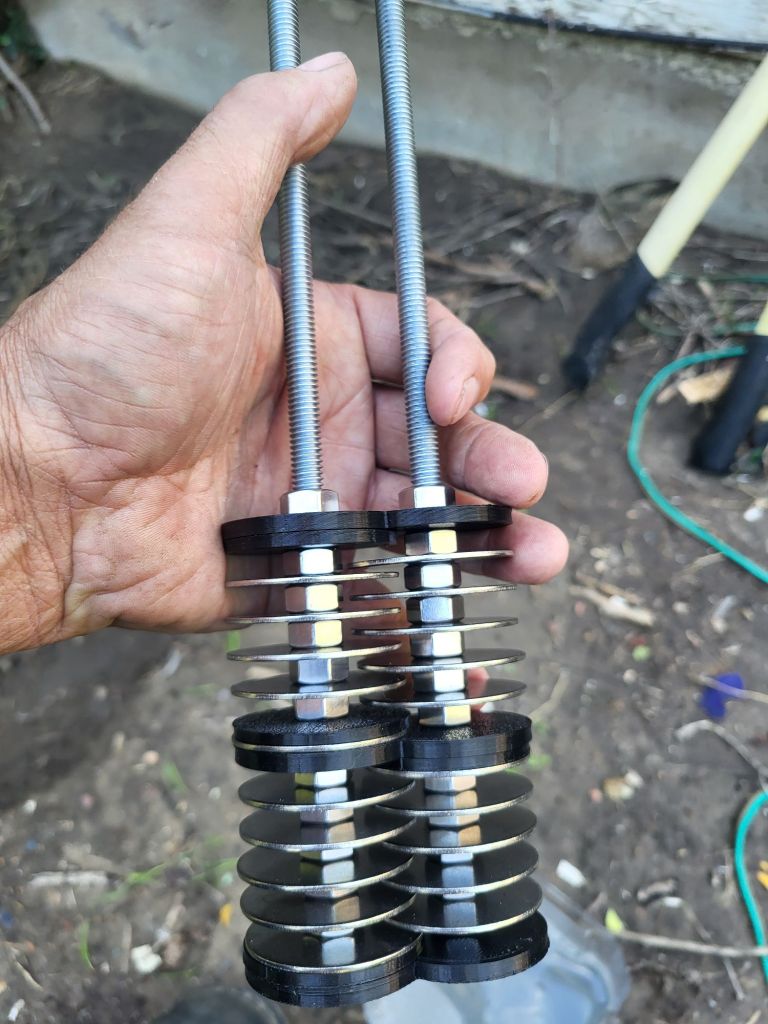
When I hooked it to the solar panels, it did nothing, then slowly it started to bubble and then it made a lot of bubbles.
I hope to use this as a torch and hopefully other uses. We will see what comes of it.
Below are some thoughts on the subject.
Harnessing Oxyhydrogen:
A Practical Guide to Small-Scale HHO Generators.
Water is made of two hydrogen atoms and one oxygen atom (H_2O). But when you pass a direct electric current through it, a fascinating transformation occurs: the chemical bonds break, releasing hydrogen and oxygen in a volatile, highly combustible gas mixture known as HHO (or Brown’s Gas).
While massive hydrogen fuel cells dominate headlines, small-scale HHO generators have quietly carved out a niche among DIY hobbyists, mechanics, and off-grid tinkerers.
How an HHO Generator Works
At its core, an HHO generator is an electrolyzer. The setup requires a few basic components:
Electrolyte Solution: Pure water is actually a poor conductor of electricity, so a small amount of an electrolyte—typically potassium hydroxide (\text{KOH}) or baking soda—is added to facilitate the flow of current.
Stainless Steel Plates: Arranged in alternating positive and negative charges (a “dry cell” or “wet cell” configuration) submerged in or fed by the water mixture.
DC Power Source: A battery, power supply, or solar panel drives the reaction.
When power is applied, bubbles immediately form on the plates. Hydrogen gas collects at the cathode, and oxygen gas forms at the anode. Instead of separating them, an HHO generator pipes them together into a single outlet hose as a 2:1 mixture of hydrogen to oxygen.
Practical Small-Scale Uses for HHO
Because HHO burns exceptionally hot (up to 2,800°C or 5,072°F) and burns back into pure water vapor, it offers several intriguing benchtop and workshop applications:
1. Precision Micro-Torch for Jewelry & Glasswork
One of the most practical DIY uses for a small HHO generator is converting it into a micro-torch.
Why it works: The flame from an HHO torch is extremely thin, clean, and intense.
Applications: Ideal for soldering silver, gold, or copper wire, as well as working with small-scale glassblowing (flameworking) or melting small quantities of precious metals without leaving carbon residue on the workpiece.
2. Carbon Cleaning for Small Engines
HHO gas is widely used in automotive engine carbon-cleaning machines, and small hobbyist setups can do the same for lawnmowers, motorcycles, or generator engines.
Why it works: Feeding a controlled amount of HHO into a running engine’s air intake elevates combustion temperatures slightly and introduces reactive hydroxyl radicals, which break down stubborn carbon deposits on valves, spark plugs, and cylinder walls.
3. Benchtop Metallurgy & Brazing
When working with metals like copper pipes or small steel joints, an HHO torch acts as a portable, cylinder-free brazing rig. Unlike traditional acetylene setups, an HHO generator makes gas on demand, meaning you don’t need to store pressurized tanks of volatile gas in your garage.
4. Educational & Off-Grid Demonstrations
Small HHO generators make excellent educational models for demonstrating electrolysis, renewable energy storage (e.g., using excess solar energy to split water), and combustion thermodynamics.
The Reality Check: Myths vs. Science
If you search for HHO generators online, you will inevitably run into claims that they can make cars run purely on water or double fuel economy.
It’s important to separate hype from physics:
The Energy Balance (Thermodynamics): Splitting water requires more electrical energy than you get back when burning the resulting HHO gas. You cannot achieve a net energy gain (overunity) using HHO.
Fuel Assistance: In small engine combustion, HHO is used as a combustion enhancer rather than a primary fuel source. Because hydrogen ignites much faster than gasoline or diesel, adding tiny amounts can help burn fuel more completely, which may slightly reduce unburnt carbon emissions under specific conditions—though driving an engine’s alternator to produce that HHO incurs an energy penalty.
Essential Safety Precautions
Working with HHO means handling stoichiometric hydrogen and oxygen—an inherently explosive mix that doesn’t need external air to ignite.
If you build or operate a generator, keep these non-negotiables in mind:
Always Use a Bubbler / Flashback Arrestor: A bubbler (a water-filled container the gas passes through) acts as a physical barrier. If a flame travels back down the hose, the explosion stops at the bubbler rather than detonating your main cell.
Never Store HHO Gas: Produce it on demand and burn it immediately. Storing stoichiometric HHO in a sealed pressure vessel is extremely dangerous.
Proper Ventilation: Hydrogen is light and diffuses rapidly, but trapped hydrogen in an enclosed space creates an explosion hazard. Always work in a well-ventilated area.
Getting Started
If you’re interested in experimenting, starting small is key. Building a simple 12V dry-cell kit or buying an inexpensive benchtop HHO jewelry torch allows you to explore the fascinating chemistry of water electrolysis safely without spending a fortune.

